

✓ Key Takeaways
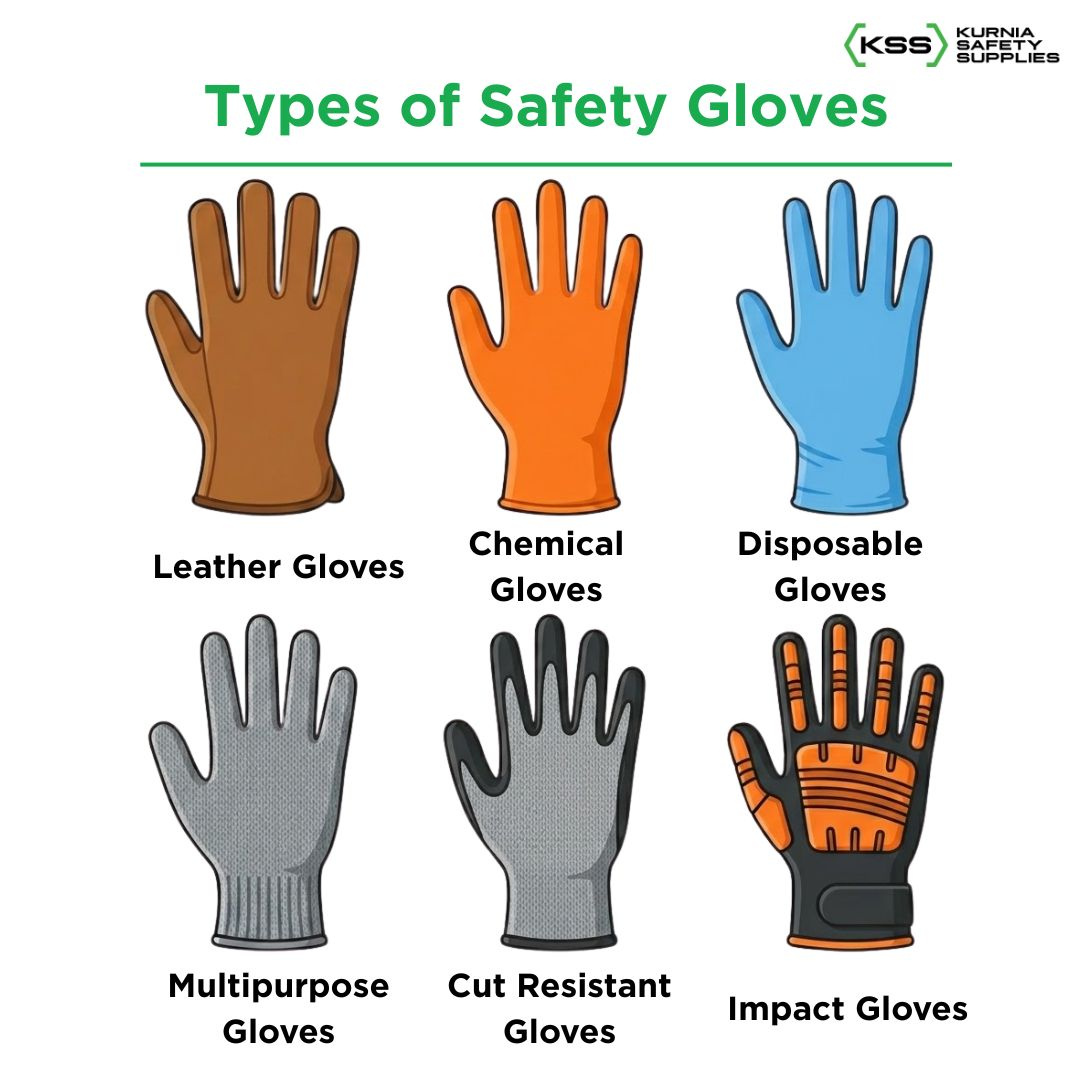
- • Leather gloves is used for abrasion and rough handling in construction and welding.
- • Chemical gloves such as nitrile, neoprene, or butyl rubber guard against solvents and acids.
- • Disposable gloves, often nitrile, latex, or vinyl, fit short single use tasks.
- • Cut resistant gloves protect against blades and sharp edges in fabrication and food processing.
- • Multipurpose gloves give flexibility for everyday warehousing tasks.
- • Impact gloves shield knuckles from shock in mining and heavy equipment work.
- • Always match the glove to the hazard, not the price.
Choosing the wrong gloves would be fatal for you and your team because it might lead to a serious injury. Workers handling chemicals, sharp materials, or rough surfaces need different levels of protection, which is why understanding the types of safety gloves matters before buying bulk. Let’s take a look further into it.
Types of Safety Gloves
Leather Gloves
Leather gloves are usually made from cowhide or split leather, giving solid resistance to abrasion, sparks, and rough handling. They are common on construction sites and welding shops where grip and durability matter more than chemical protection.
Chemical Resistant Gloves
These chemical gloves are made from materials such as nitrile, neoprene, butyl rubber, or PVC, each divided according to what chemicals are the industry handling. They are used in manufacturing plants, laboratories, and industrial cleaning facilities, handling solvents or acids.
Disposable Gloves
Disposable gloves are typically made from nitrile, latex, or vinyl, meant for single. Nitrile suits labs and medical settings for puncture resistance, while latex and vinyl fit lighter tasks such as food handling.
Cut Resistant Gloves
Cut resistant gloves use fibers like Kevlar, HPPE (high-performance polyethylene), or steel reinforced yarn. They are essential in metal fabrication, glass handling, and food processing where sharp edges are a part of the work.
Multipurpose Gloves
Multipurpose gloves combine a knitted nylon or polyester shell with a nitrile or latex coating on the palm. They suit warehousing, logistics, and general construction tasks needing flexibility with basic grip and light protection.
Impact Gloves
Impact gloves use padded TPR (thermoplastic rubber) and EVA (Ethylene-vinyl acetate) foams over the knuckles and fingers to absorb shock from heavy tools or falling objects. They are common in oil and gas, mining, and heavy equipment work.
How to Choose the Right Gloves for Your Work
- Match the glove to the hazard, not the look of it. Key points to check:
- Identify the main hazard, whether chemical, cuts, impact, or general wear
- Check the certification, such as ANSI/ISEA 105 for cuts or EN 374 for chemicals
- Match the material to the chemical involved, since no single glove resists everything
FAQ
What gloves are best for Dimethyl Sulfoxide (DMSO)?
Butyl rubber, Viton, neoprene, or laminate gloves like Silver Shield (PE/EVOH) work best for DMSO. Nitrile and latex are not reliable for extended contact.
Which is safer? Nitrile or Latex gloves?
Nitrile is generally safer since it resists punctures and most chemicals better, and it avoids the risk of latex allergy. Latex is still common in medical settings for its flexibility and grip.
What are the different types of safety gloves for electricians?
Electrical insulating rubber gloves are classified under ASTM D120 into six classes, Class 00 through Class 4, based on maximum voltage. Electricians should always match the class types to the voltage they may encounter.
Need certified gloves for your team? Kurnia Safety Supplies carries safety gloves for industrial use, from disposable nitrile to cut resistant options for construction, manufacturing, and chemical handling work.