



Working at heights holds significant risks, and without the right safety measures in place, the consequences can be fatal and permanent.
A fall protection system is a set of equipment and procedures designed to prevent workers from falling or to minimize injury if falling by accident occurs.
Understanding the different types available helps safety managers and workers choose the most appropriate solution for their specific work environment.
Types of Fall Protection System
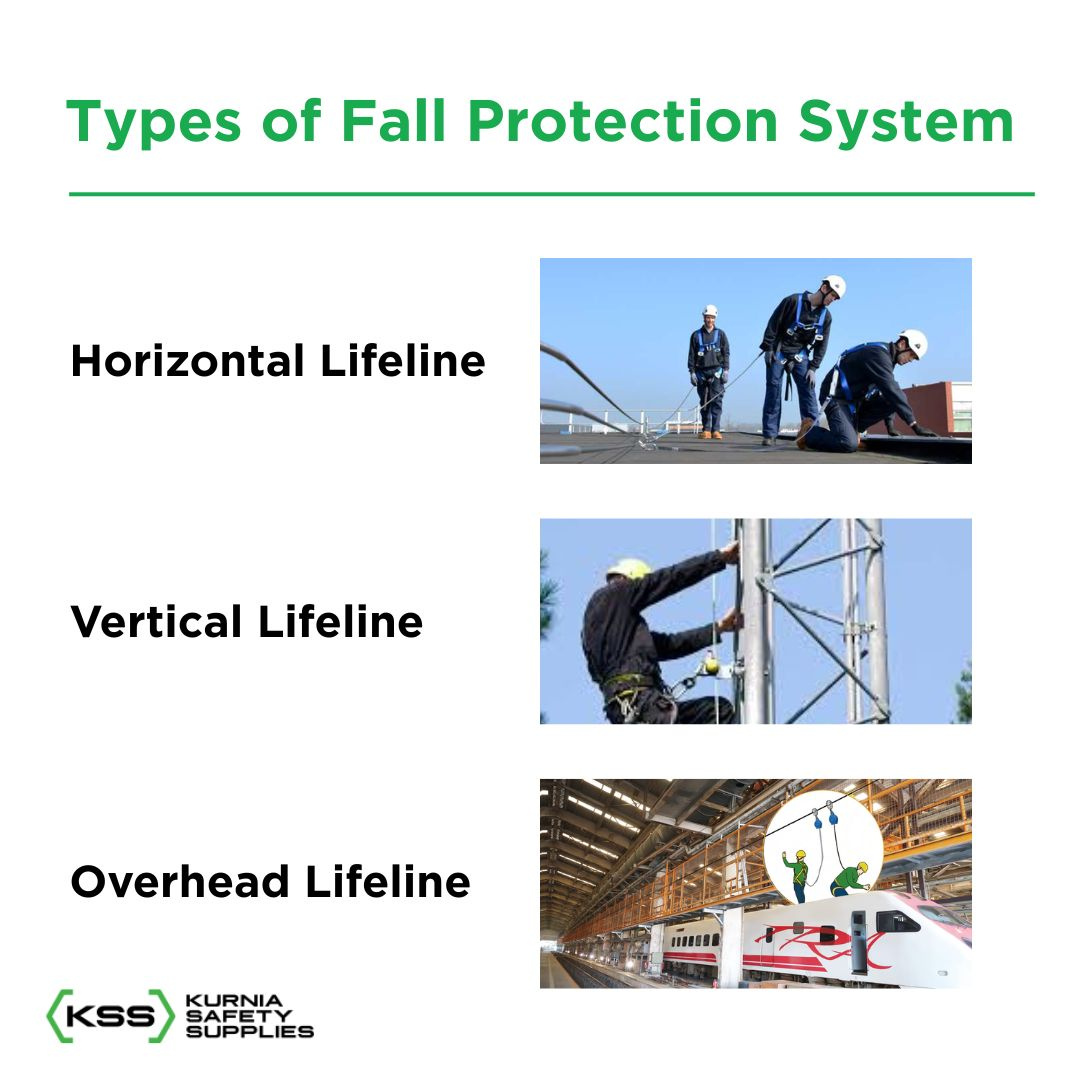
Choosing the right system depends on the type of work, how high your workplace is, and the structure of the building. Listed below are the types of fall protection system you ought to know.
Horizontal Lifeline System
A horizontal lifeline system consists of cable or rigid railings installed horizontally between two anchor points. Workers attach their lanyards into this line, allowing them to move freely along a structure while remaining continuously protected. This system is widely used on rooftops, bridges, and elevated walkways where workers can travel laterally across a surface.
Vertical Lifeline System
A vertical lifeline system runs from a fixed overhead anchor point downward. Workers connect a rope grab or self-retracting lifeline (SRL) to the vertical cable, which automatically locks if workers fall by accident. This system is ideal for tasks such as tower climbing, ladder access, and façade work where movement is primarily up and down.
Overhead Lifeline System
An overhead lifeline system, sometimes called an overhead fall protection or monorail system, suspends the lifeline above the worker's head. This configuration eliminates the free-fall distance and reduces swing-fall risk, making it one of the safest options for industrial environments. It is commonly installed in warehouses, manufacturing plants, and loading facilities.
Fall Arrest System Components
A personal fall arrest system (PFAS) works only when all of its components function correctly together. Every component must be inspected before use and replaced if damaged.
-
Body Harness
A full-body harness distributes forces across the chest, shoulders, thighs, and pelvis during a fall. Regular inspection for fraying, damaged buckles, or corrosion is essential to ensure that equipment is ready to use at all times. -
Lanyard
A lanyard connects the body harness to the anchor point or lifeline. Shock-absorbing lanyards are preferred as they reduce the impact force transmitted to the worker's body during a fall arrest. -
Connectors
Connectors includes: snap hooks, carabiners, and D-rings that link the components of the system all together. All connectors must be self-locking or double-locking, and their gates must withstand a minimum load capactiy to prevent accidental disengagement. -
Anchorage
The anchorage point is the fixed structure to which the entire fall arrest system is attached. It must be strong enough to support the forces generated during a fall and should be positioned above the worker whenever possible to reduce free-fall distance
A reliable fall protection system is non-negotiable in any working-at-heights environment. Looking for a lifeline installment plan for work safety? Contact us through info@kurniasafety.com or see more details on kurniasafety.com for further details – Kurnia Safety, your reliable safety partner.