


Before purchasing electrical insulating gloves, it is essential to understand the selection criteria, voltage classifications, and international standards that govern them.
This blog article walks you through everything you need to know about them and how you would choose the right gloves for your situation.
Choosing Electrical Gloves Based on Your Work Environment
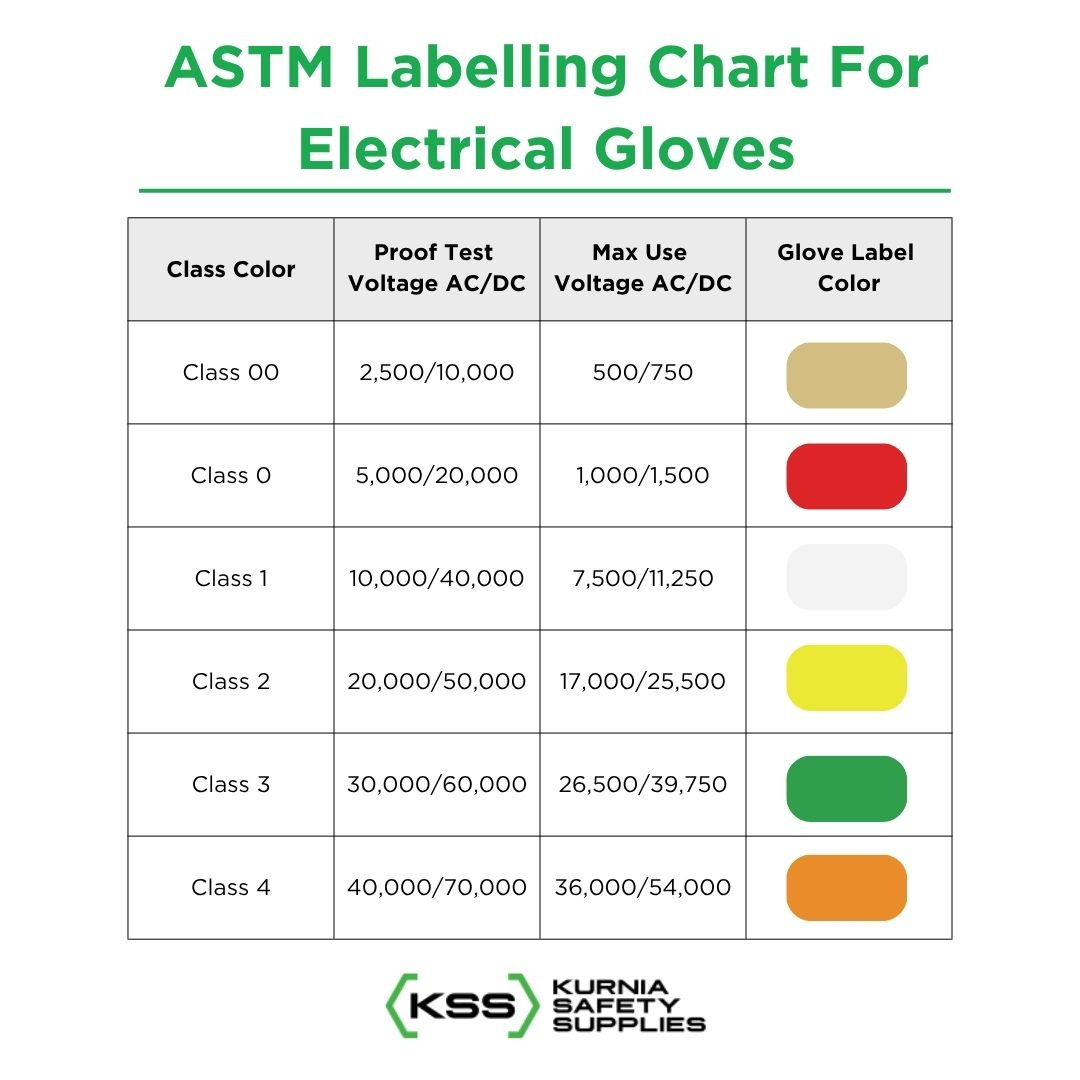
The most important factor when selecting electrical gloves is the maximum voltage present in your work area. Each glove class is rated for a specific voltage range — using the wrong class can leave a worker dangerously unprotected.
Start by identifying the maximum operating voltage at your site, then match it to the appropriate glove class below.
Low Voltage (Class 00 and Class 0)
For general electrical work and household installations, low-voltage electrical gloves in Class 00 or Class 0 are sufficient:
- Class 00 Electrical Gloves — protection up to 500V AC / 750V DC
- Class 0 Electrical Gloves — protection up to 1,000V AC / 1,500V DC
These classes are suitable for residential electrical installations, low-voltage panel maintenance, and general electrical tasks.
High Voltage (Class 1 to Class 4)
For industrial, utility, and transmission work, higher-class electrical gloves are required:
- Class 1 Electrical Gloves — up to 7,500V AC / 11,250V DC
- Class 2 Electrical Gloves — up to 17,000V AC / 25,500V DC
- Class 3 Electrical Gloves — up to 26,500V AC / 39,750V DC
- Class 4 Electrical Gloves — up to 36,000V AC / 54,000V DC
Class 3 and Class 4 electrical gloves are typically required in substation environments, high-voltage transmission systems, and heavy industrial installations.
Electrical Gloves Class Rating Chart
The table below provides a complete breakdown of AC and DC voltage ratings across all classes of electrical insulating gloves:
| Class | Max AC Voltage | Max DC Voltage | Typical Application | Use Case |
|---|---|---|---|---|
| Class 00 | 500V | 750V | Residential electrical work | Low voltage |
| Class 0 | 1,000V | 1,500V | General low-voltage tasks | Low voltage |
| Class 1 | 7,500V | 11,250V | Light industrial use | Medium voltage |
| Class 2 | 17,000V | 25,500V | Utility & substation work | High voltage |
| Class 3 | 26,500V | 39,750V | Transmission line maintenance | High voltage |
| Class 4 | 36,000V | 54,000V | Heavy industrial & substations | High voltage |
Always select the right type of glove class whose rated voltage exceeds the maximum voltage you expect to encounter at your work site.
International Standards for Electrical Insulating Gloves
When selecting electrical gloves, always try to verify that the product meets international safety standards. Certification is not optional, but it is a legal and safety requirement for most industries.
ASTM D120
ASTM D120 is the primary international standard covering specifications for rubber insulating gloves, including voltage class ratings, dielectric test requirements, and material properties. Any electrical gloves sold for professional use should comply with this standard.
OSHA 1910.137
This US workplace electrical safety regulation references ASTM D120 and mandates that insulating gloves be regularly retested. Employers in the United States are legally required to follow this regulation.
IEC 60903
IEC 60903 is the international equivalent standard, setting strict requirements for the electrical, mechanical, thermal, and aging properties of protective gloves used in electrical work. It is widely recognized outside of the United States.
Industries That Require Electrical Gloves
Several industries depend on properly rated electrical gloves as part of their mandatory PPE requirements:
-
Automotive (Electric Vehicles)
The rapid growth of the EV industry means more technicians are working with high-voltage battery systems daily. EV battery packs often carry voltages of 400V to 800V or higher, making Class 1 or Class 2 electrical gloves essential for safe operation. -
Manufacturing
In manufacturing environments, workers performing maintenance on high-voltage industrial machinery face risks of arc flash and electric shock. Electrical gloves protect against both and are a core component of any arc flash PPE program. -
Electrical Utilities and Power Grid
Power grid technicians, substation operators, and electrical installation crews require Class 2 to Class 4 electrical gloves for energized line work. This includes personnel working for utility companies, electrical contractors, and government infrastructure agencies.
Final Checklist Before Buying Electrical Gloves
Before making a purchase, confirm the following:
- Identify the maximum voltage in your work area
- Select the correct class (00 through 4) that exceeds that voltage
- Confirm the product is certified to ASTM D120 or IEC 60903
- Check the test date label. Gloves must be within their valid test period
- Pair with outer leather protector gloves when required by your safety protocol
Selecting the right electrical gloves means understanding your working voltage, following ASTM D120 and IEC 60903 standards, and choosing the correct class from Class 00 for household tasks up to Class 4 for heavy industrial environments. Always verify certification labels and retest dates before use. Workplace safety begins with the right PPE.
Visit kurniasafety.com to find certified electrical insulating gloves for every voltage class and application.