


A safety helmet is one of the most critical pieces of personal protective equipment (PPE) on any worksite. Whether you're managing a construction project, working in electrical utilities, or overseeing HSE compliance, choosing the right helmet can mean the difference between a minor incident and a serious injury.
This article breaks down everything you need to know from types and classes to color codes so you’re well-informed prior choosing and buying the right product for your site.
Types of Safety Helmet
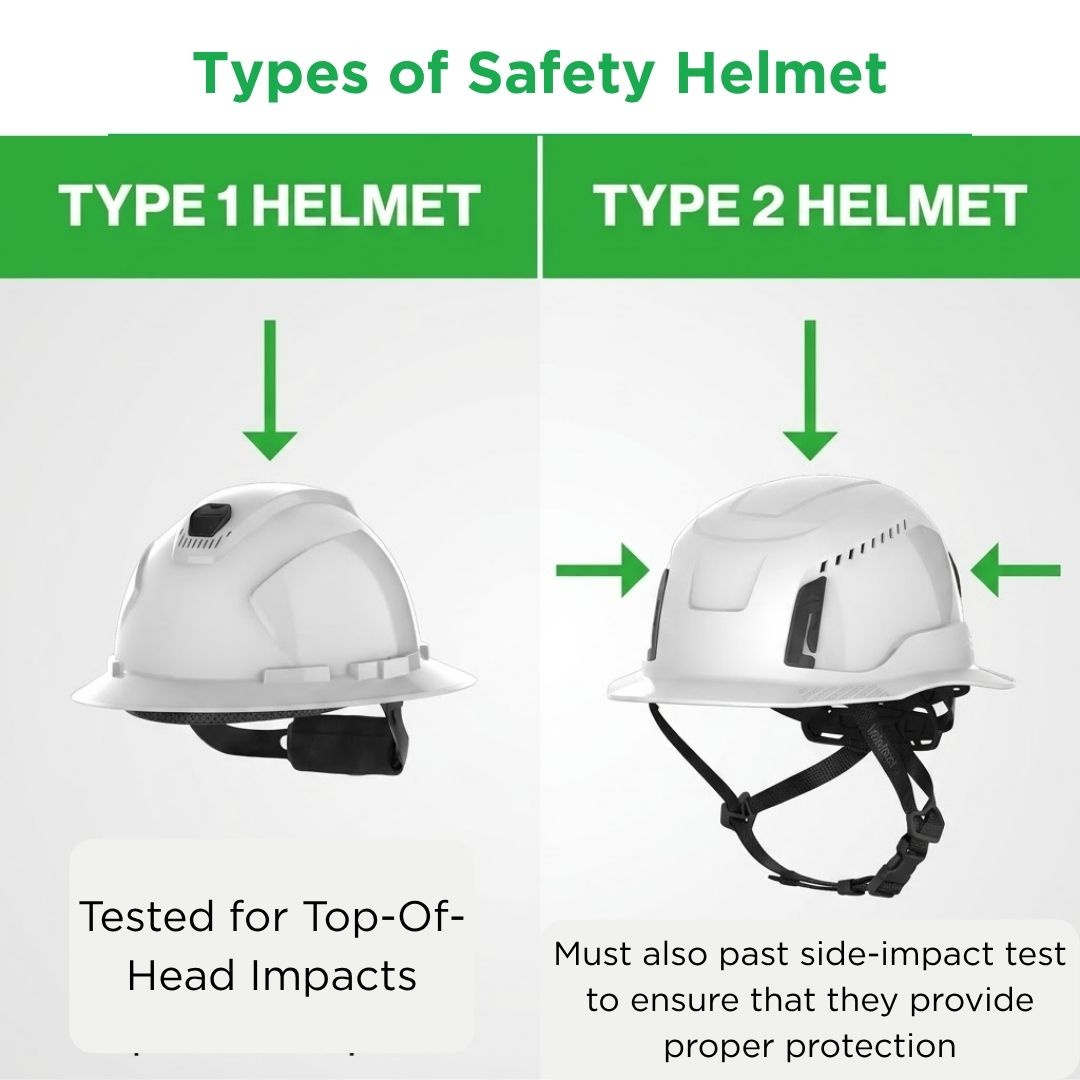
Safety helmets are primarily classified into two types based on the area of head protection they offer, as defined by the ANSI/ISEA Z89.1 standard.
-
Type 1
Type 1 safety helmets are designed to protect against impact forces directed at the top of the head. They are the traditional hard hat style, commonly used in construction, manufacturing, and general industrial environments where overhead hazards such as falling tools or debris are the primary concern. Their lighter weight makes them practical for extended use throughout a full shift.
-
Type 2
Type 2 safety helmets offer a higher level of protection. In addition to protecting top-of-head impact, they are engineered to absorb blows from the front, back, and sides. They feature reinforced lateral padding and a more robust shell construction, making them a better choice in environments with multi-directional impact risks, such as high-rise construction or confined spaces.
Safety Helmet Colors
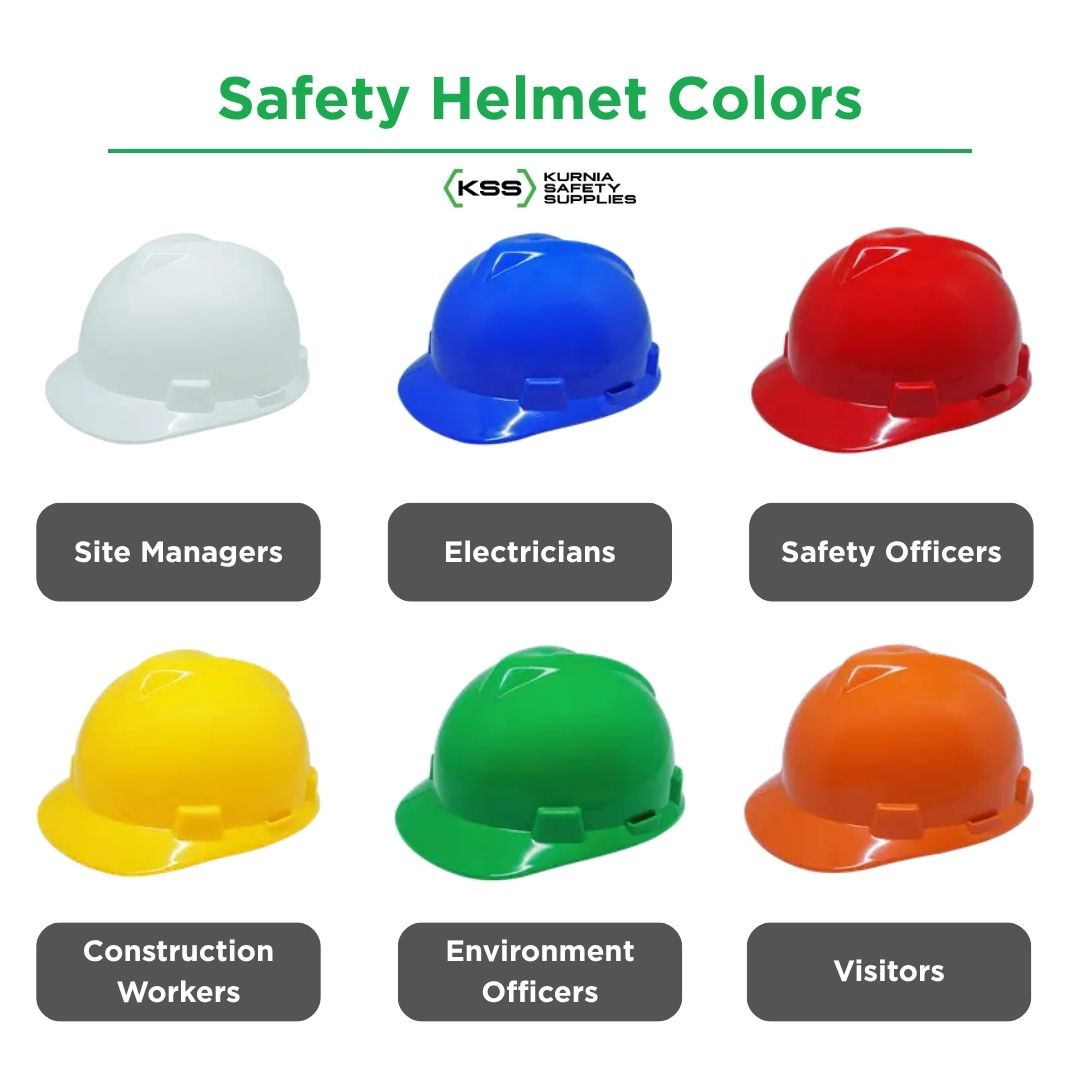
While no universal color standard is mandated by OSHA, color-coding has become a widely adopted industry practice to identify roles and improve coordination on-site.
-
White
White helmets are typically worn by site managers, engineers, and supervisors. They signal leadership responsibility and overall project oversight. Some industries use extra labelling features to indicate whether they’re site engineers, supervisors, project managers or visitor.
-
Blue
Blue helmets identify technicians, electricians, and equipment operators. This color helps teams quickly spot personnel responsible for specialized or technical tasks.
-
Red
Red helmets are generally assigned to safety officers or emergency responders/fire safety personnel. In some sites, they are also worn by visiting inspectors or client representatives.
-
Yellow
Yellow is the most common color on a worksite, worn by general laborers and construction workers. The bright tone also enhances visibility in busy working environments.
-
Green
Green helmets are associated with environmental inspectors and waste management workers who are still under supervision or undergoing site induction.
-
Orange
Orange helmets are usually used by visitors or temporary staffs. It has high visibility to identify personnel more easily and indicates that wearers are not involved in any direct construction work.
Safety Helmet Classes
Helmet classes define the level of electrical and impact protection a helmet provides, as established by ANSI/ISEA Z89.1-2014.
-
Class E (Electrical)
Designed for workers working in high-voltage environment, Class E helmets are proof-tested at 20,000 volts. They are used when working with electrical utilities & high voltage equipment. -
Class G (General)
Class G helmets offer moderate electrical protection, tested up to 2,200 volts. Suitable for workers who work around low voltage power sources such as those in general construction, mining, and forestry operations.
-
Class C (Conductive)
Class C helmets provide no electrical protection but offer impact protection where risk of falling objects are present. Best used in environments where electrical hazards are absent.
Find the Right Safety Helmet for Your Team
Selecting the right safety helmet goes beyond safety compliance, it protects lives. Whether you need Type 1 for general construction or Class E for electrical work, the right choice starts with understanding your site's hazards.
Want to know more? Explore our complete range of certified safety helmets at kurniasafety.com.