


✓ Key Takeaways
- • A hazmat suit is a type of coverall that protects workers from chemica/biological/radioactive hazards.
- • Exist from level A to D: Level A and B are for unknown hazards, C are used for known low risk substances, and D is for tasks with no real threats.
- • European standards classify suits by Type instead of Level, ranging from Type 1 (most protective) to Type 6 (least protective).
- • Choosing the right suit depends on: assessing the risks, identifying how exposure happen, and matching choosing the right material.
When a chemical spill or accident occurs, picking the wrong protection level may cost lives. Safety managers across industries, from pharmaceuticals to waste management, often struggle to match the right hazmat suit to the actual risk on site.
Understanding the types of hazmat suit and how each level works is the first step to getting that right. Let’s take a closer look in this article.
What is a Hazmat Suit?
A hazmat suit, short for hazardous materials suit, is a full-body garment built to protect workers from dangerous materials such as chemicals, biological agents and radioactive substances. It acts as a physical barrier between the worker and exposure risk, allowing operations to continue safely in high-hazard environments.
4 Levels of Hazmat Suit
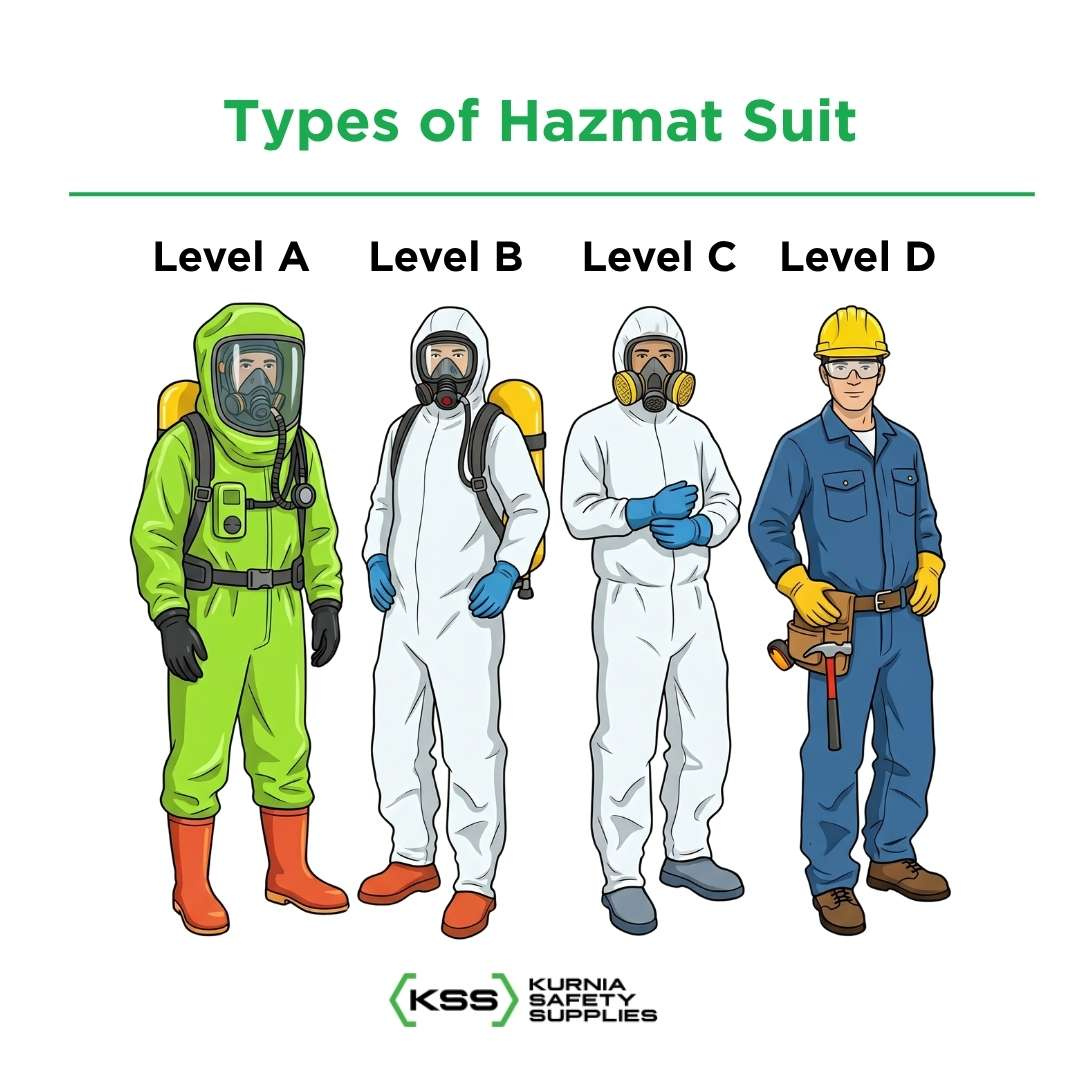
OSHA defines four levels of hazmat protection, ranging from Level A as the most protective to Level D as the least protective, as outlined in 29 CFR 1910.120 Appendix B. This is what is listed in the United States:
-
Hazmat Suit Level A
Level A suits provide maximum protection with a fully encapsulating chemical-resistant suit and a self-contained breathing apparatus (SCBA), used in environments where hazards are highly toxic or unidentified. It provides the highest level of respiratory, skin, and eye protection from solid, liquid ad gases. -
Hazmat Suit Level B
Level B is applied when the primary danger comes from inhaling hazardous substances, requiring the highest level of respiratory protection, but its protection is lower compared to level A. They provide liquid splash protection but does not safeguard against gas vapors. Level B Suits also requires SCBA as a breathing apparatus. -
Hazmat Suit Level C
Level C provides the same degree of skin protection as Level B but with a lower level of respiratory protection, using air-purifying respirators (APR) instead of SCBA. It is appropriate when the substance has been identified and known to have low risks when exposed to skin and lungs. -
Hazmat Suit Level D
Level D consists of basic coveralls, safety glasses, gloves and boots, used only where contaminants pose minimal threat, and there are no respiratory or chemical splash hazards present.
European Standards for Chemical Protective Clothing
For companies operating under European regulations, chemical protective suits are classified by type rather than level. The key categories verified by EN standards are:
- Type 1: Gas-tight suits with internal or external air supply (Type 1a/1b) or positive pressure air lines (Type 1c). Used against substances like ammonia, chlorine or hydrogen cyanide.
- Type 2: Not gas-tight, but breathable air is supplied into the suit via positive pressure air lines. Suited for stationary tasks in pharmaceutical or hazardous materials environments.
- Type 3: Liquid-tight suit connections, tested with compressed water jets. Used where chemicals may splash under pressure.
- Type 4: Spray-tight connections, tested by water spray. Used where small chemical splashes are the primary risk in open work spaces.
- Type 5: Offers particle protection (solid chemicals, powders)
- Type 6: Light splash protection (low volume, short contact)
How to Choose the Right Hazmat Suit
- Conduct a risk assessment: Identify the chemicals people are working with, identify their physical state (gas, liquid, solid) and how workers could be exposed.
- Determine the exposure route: knowing the exposure routes helps to choose the types of hazmat suit suitable for you.
- Match the fabric to the hazard. Chemical resistance, durability and compatibility with other PPE all matter.
Now you know the basics on choosing the right type of Hazmat Suit. Looking for one? Visit or consult with kurniasafety.com and speak with our team about your site’s risks so you can choose the right one for you. Kurnia Safety, Your Reliable Safety Partner.