


Key Takeaways
- • Respirators are split into two types: APRs and atmosphere supplying respirators.
- • Common APR options include elastomeric half/full face pieces (reusable, for chemical and welding work), disposable N95 style FFRs (healthcare, construction), and PAPRs (battery powered airflow for long shifts).
- • For high risk or oxygen deficient spaces, use supplied air respirators (hose fed) or SCBA (independent tank, used by firefighters).
- • Before wearing any respirator, get a medical evaluation, pass a fit test, and stay clean shaven in the seal area.
- • For dust, N95 masks work well. For heavier hazards like fumes or woodworking, reusable half facepieces with P100 or vapor cartridges are the standard.
When people talk about types of respirators, they usually picture the usual masks, N95s, or gas masks. In safety standards, though, respirators are grouped more systematically based on how they protect your lungs and what hazard they're built for (i.e., particles, gases, vapors, or oxygen deficient air)
According to NIOSH and OSHA guidance, the right respirator depends on the specific contaminants. To understand more about respirators, take a look at this blog.
Types of Respirators Based on Needs
NIOSH splits workplace respirators into two broad groups based on how they deliver protection:
- Air purifying respirators, which clean the surrounding air by passing it through filters, cartridges, or canisters to remove particles, gases, and vapors
- Atmosphere supplying respirators, which deliver clean breathing air from an independent source, such as a cylinder. Usually used when surroundings are oxygen-deprivied.
Here's a practical breakdown of each group, that you could see which fits best for your job.
Air Purifying Respirators (APRs)
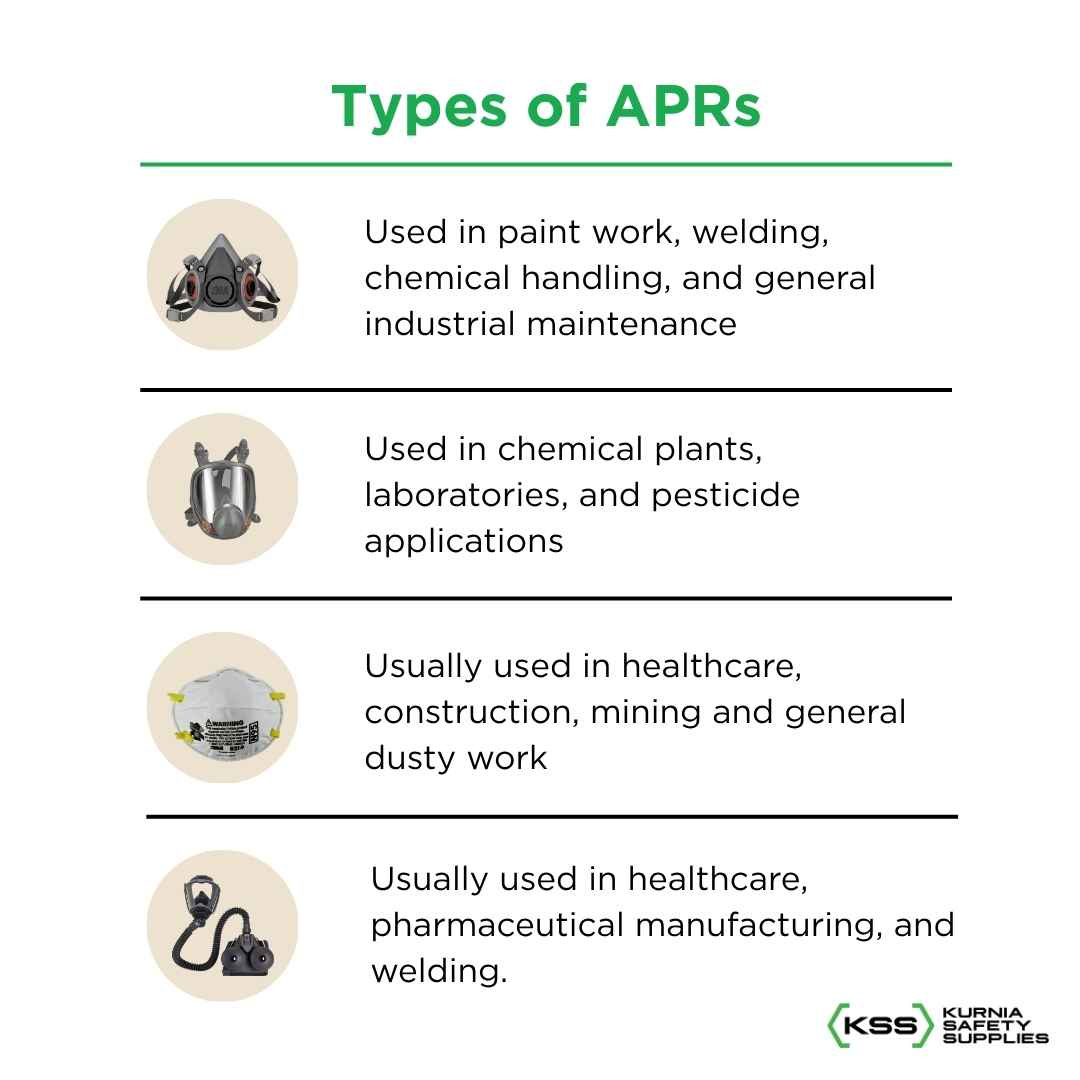
Air Purifying Respirator designs use filters, cartridges, or canisters to strip contaminants from air instead of pulling air from another source. They're lighter and more compact, which is why they're so widely used, but please note that APRs should never be worn in oxygen-deficient environments. Here are the types of APRS:
-
Elastomeric Half Face Piece Respirator
An elastomeric half facepiece covers your nose and mouth and uses replaceable filters or gas cartridges attached to a reusable mask body. It can be fitted with particulate filters for dust and mists, or chemical cartridges for organic vapors, acids, or ammonia, depending on the hazard.
These masks are tight fitting and require a fit test, but they offer stronger protection than the usual disposable masks. Usually used in paint work, welding, chemical handling, and general industrial maintenance. -
Elastomeric Full Face Piece Respirator
An elastomeric full facepiece extends protection to the eyes, sealing around the entire face with a clear visor added on. It uses the same particulate filters and gas or vapor cartridges as half face models, but the larger sealing area and eye protection make it suitable for high-risks severe chemical exposure.
Full face respirators show up often in chemical plants, laboratories, and pesticide applications, or anywhere you need both respiratory and splash protection at once. Properly fit tested and maintained. -
Filtering Face Piece Respirators (FFRs)
Filtering facepiece respirators are disposable masks where the entire facepiece is the filter material. N95 is the most familiar example.
These masks are tight fitting, require fit testing in occupational settings, and are common in healthcare, construction, mining and general dusty work simply because they're simple, light, and easy to use. -
Powered Air Purifying Respirators (PAPR)
Powered air purifying respirators use a battery powered blower to pull air through high efficiency filters or cartridges, then push it into a hood or tight fitting facepiece. That airflow cuts breathing resistance, which makes PAPRs more comfortable for long shifts and workers with heavier breath. You'll find PAPRs in healthcare, pharmaceutical manufacturing, and welding.
Atmosphere Supplying Respirators
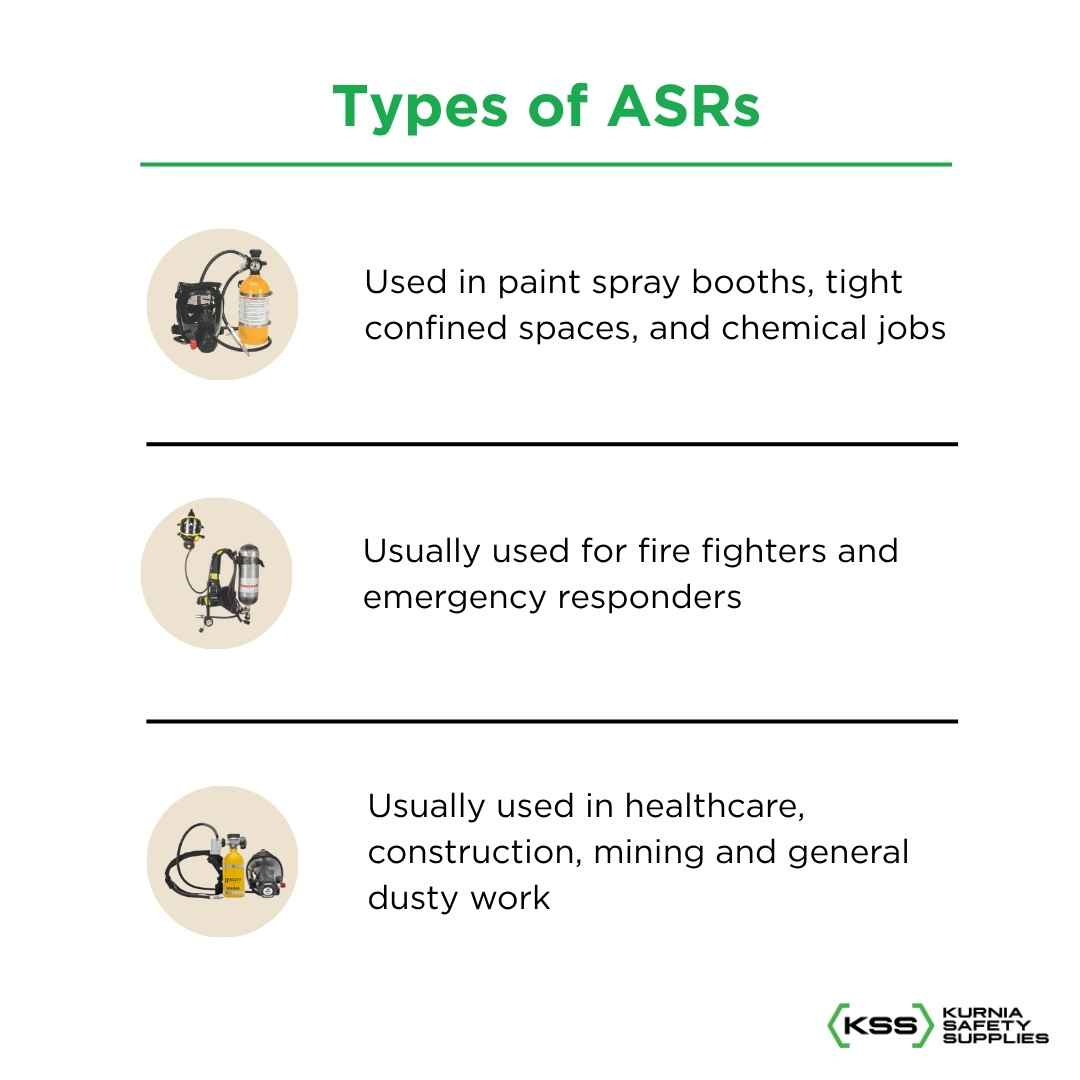
Atmosphere supplying respirators deliver clean air from a compressed air system or cylinder, so the wearer no longer depends on air at all. Usually, they’re used when the atmosphere has low levels of oxygen.
-
Supplied Air Respirators (SAR)
Supplied air respirators, also called airline respirators, use a hose to pump clean air from a source outside the danger zone straight to the worker's mask or hood. This means the worker always breathes fresh air, even while working inside the hazard area. You'll usually find these in paint spray booths, tight confined spaces, and chemical jobs. Since the hose limits how far the worker can move, this type works best for jobs done in one spot.
-
Self Contained Breathing Apparatus (SCBA)
Self contained breathing apparatus units carry their own compressed air or oxygen on the worker's back, connected to a full facepiece through a regulator. Because they're independent of the surrounding atmosphere. They serve the highest protection for breathing apparatus. Usually used for fire fighters and emergency responders. Though proper training needs to be done before using.
-
Combination SAR and SCBA
Combination systems connect the worker to a remote air line while also carrying a small SCBA cylinder as backup. Normally, the wearer breathes from the supplied air line, but if the hose gets damaged or the compressor fails, they can switch to the onboard cylinder to safely exit the hazard area. This setup is common in high risk industries like refineries, chemical processing, and mining.
FAQ: Common Questions About Respirators
Find the Right Respirator at Kurnia Safety
Now you know about types of respirators. Now, before you continue purchasing, try to study your choices of products so it matches best with the hazard you’re working with. Make sure you consult with your PPE supplier. Need a PPE supplier for your business in Indonesia? Consult with us now at kurniasafety.com.